(Lighter weight, high pressure, and just enough dad jokes to keep you awake.)
By Samantha Callaghan
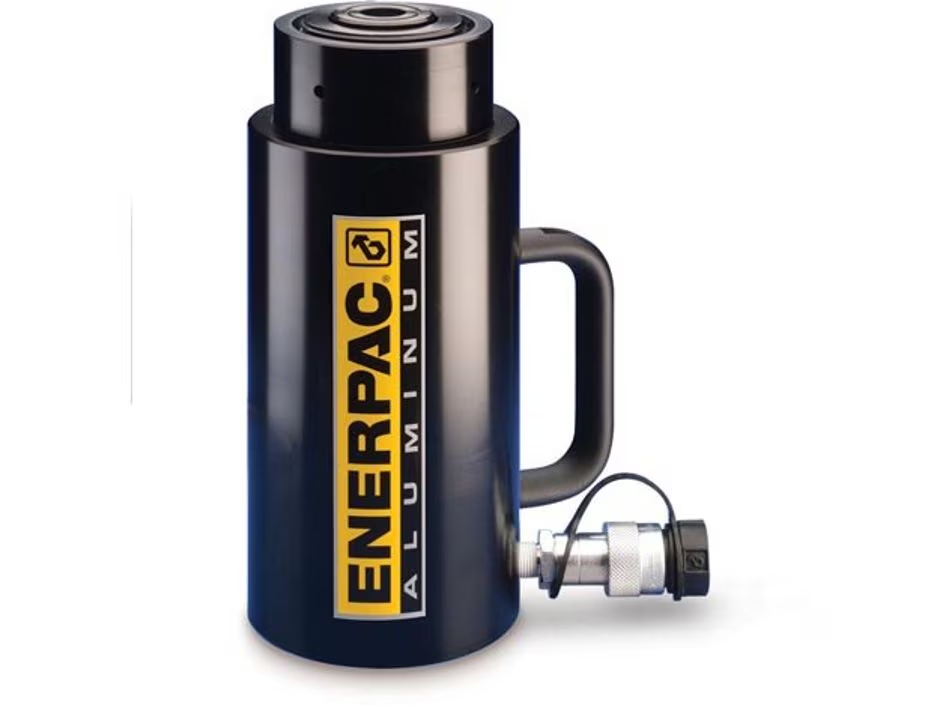
Enerpac Aluminum Cylinders are what you buy when you want full 10,000 psi performance without feeling like you’re hauling a boulder across a jobsite.
Same power.
Same durability.
About half the weight — which is great, because no one gets a medal for “Most Strained Back.”
Let’s walk you through the Northland way to pick the right one — useful, simple, and sprinkled with a few groan-worthy jokes for flavor.
1️⃣ WHY ALUMINUM? (Because Your Back Deserves Happiness)
Enerpac aluminum cylinders are perfect for anyone who’s ever thought:
“There has GOT to be something lighter than steel… right?”
Yes. Yes there is.
Choose aluminum when:
You actually have to carry the cylinder (wild concept, we know)
You work in rail, bridge, field, or construction environments
You climb ladders, scaffolding, or platforms
You want a cylinder lighter than your toolbox — for once
You still get:
10k psi
Hard-coat durability
Steel base + saddle
Internal stop rings
Dad joke moment:
They’re so light, even your coffee cup might get jealous.
2️⃣ CHOOSE YOUR SERIES (The “Which Tool Fits the Job?” Step)
🔸 RAC – Single-Acting, Solid Plunger
Lightweight. Strong. Reliable.
The “everyday good kid” of the family.
🔸 RAR – Double-Acting, Solid Plunger
For hydraulic users who don’t trust gravity to do its job.
(Who could blame you?)
🔸 RACL – Locknut Aluminum
Lift it. Lock it. Walk away.
The “set it and forget it” cylinder.
🔸 RACH / RARH – Hollow Plunger
For tensioning, pulling, testing, or jobs where a rod needs to pass through —
basically the multitasker of the group.
Northland translation: Tell us what you’re actually doing, and we’ll point you to the right one — no guesswork required.

3️⃣ TONNAGE (Don’t Undersize It — This Isn’t a Jellybean Guessing Game)
Before choosing tonnage, you need:
The real load weight
The number of lift points
A 20–50% safety margin
A realistic understanding that “it doesn’t look that heavy” has never been correct in the history of hydraulics
Most aluminum cylinders fall between 20–150 tons.
Dad joke alert:
Always size up — because the only thing worse than being wrong is being wrong publicly.
4️⃣ STROKE LENGTH (How High You Actually Need to Go)
Most aluminum cylinders offer:
2" (50 mm)
4" (100 mm)
6" (150 mm)
Up to 8" depending on the model
other lengths also available
Choose based on:
Clearance under the load
Cribbing height
How many steps your lift will take
Northland Tip:
Measure clearly. Measure again. THEN order.
(No, holding your tape measure “near” the load does not count.)
5️⃣ SINGLE-ACTING VS DOUBLE-ACTING (Two Ways to Do the Same Job)
Single-Acting
Pressure up
Gravity/load down
Simple & lighter
Double-Acting
Pressure up
Pressure down
Faster & more controlled
Ideal for synchronized lifts
Dad joke:
Double-acting is like having a teenager who actually listens — rare, but very convenient.
6️⃣ SOLID VS HOLLOW PLUNGER
Solid Plunger
For lifting, pushing, and general heavy work.
Hollow Plunger
For tensioning bolts, anchors, strands — basically anything where something needs to pass through the center.
If you tell us you’re tensioning and order a solid plunger…
we will give you the look.
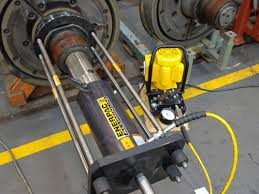
7️⃣ MATCH YOUR PUMP (Don’t Marry the Wrong One)
You need:
A 10,000 psi pump
Enough oil volume for the cylinder
Matching 10k psi hoses and couplers
Hand pumps = okay for small aluminum cylinders.
Air/electric pumps = better for big strokes, big tonnage, or repeat use.
Northland reality check:
We’ll always match the pump for you — because guessing oil volume is how hydraulic nightmares start.

8️⃣ ENVIRONMENT & HANDLING (Where Aluminum Shines Brightest)
Aluminum cylinders are ideal for:
Field repairs
Bridge & rail work
Overhead lifting
Remote job sites
Any place where weight matters more than bragging rights
Dad joke:
They’re light enough you might think you forgot them… don’t worry, you didn’t.
9️⃣ THE NORTHLAND AIR QUICK-CHECK LIST
Before buying, confirm:
⬜ Load weight
⬜ Tonnage per cylinder
⬜ Stroke needed
⬜ Single vs double acting
⬜ Solid vs hollow plunger
⬜ Pump match
⬜ Hose/coupler rating
⬜ Any long-duration hold requirements
If any of these are blank… that’s literally why we exist.
🔟 FINAL WORD — THE NORTHLAND AIR PROMISE
At Northland Air Hydraulics, we help you:
Pick the right Enerpac aluminum cylinder
Match it with the correct pump
Get the proper hoses, couplers, and gauges
Avoid mis-sizing
Understand the specs
Keep your job safe and efficient
We’ve been doing this long enough to know:
Too heavy = pain
Too small = danger
Aluminum done right = perfect.
⚠️ QUICK NOTE: WHAT ALUMINUM CYLINDERS ARE NOT GOOD FOR
Very high tonnage lifts — when loads get monstrous and weigh a ton,
Steel takes the lead; aluminum’s done.Any side-loading — keep it straight, don’t twist or bend,
Angle that lift and the job might end.Heavy abuse or impact — when the worksite’s wild and tough,
Steel’s the champ; aluminum says “enough.”Long-term load holding unless it’s a locknut aluminum model,
Without that nut, the load won’t coddle.High-heat environments where aluminum softens faster,
Steel stays cool; aluminum’s a disaster.
Northland Tip:
Aluminum = great for mobility.
Steel = great for punishment.
And remember — if there’s ever doubt,
Check the manufacturer specs and sort it out.
And just because no one asked for it…
🚀 EMOJI FLOWCHART — THE QUICK-PICK GUIDE
🚀 START
│
▼
🧐 What are you trying to do?
│
├── 🔼 Lift something heavy
│
└── 🤷♂️ Not sure → Ask Northland Air (it’s okay, we’ve seen everything)
│
▼
📦 STEP 1 — TONNAGE
│
├── ⚖️ Know the load weight
├── ➗ Divide by # of cylinders
├── ➕ Add 20–50% safety
│
└── 👴 Dad Tip: “Guessing tonnage is how cylinders cry.”
│
▼
📏 STEP 2 — STROKE
│
├── 📐 50 mm – small lifts
├── 📏 100 mm – most common
├── 🪜 150–200 mm – cribbing steps
│
└── 👴 Dad Tip: “Measure twice. Complain once.”
│
▼
⚡ STEP 3 — ACTING STYLE
│
├── 🔸 SINGLE-ACTING (RAC/RACL)
│ • ⬆️ Pressure up
│ • ⬇️ Gravity down
│ • 🎒 Lightest option
│
└── 🔹 DOUBLE-ACTING (RAR/RARH)
• ⬆️ Pressure up
• ⬇️ Pressure down
• 🏎️ Faster cycles
• 🎯 Best control
│
▼
🎯 STEP 4 — WHICH PLUNGER?
│
├── 🧱 SOLID PLUNGER
│ • Lifting / pushing
│
└── 🕳️ HOLLOW PLUNGER
• Tensioning
• Pulling
• Rod-through jobs
• 👴 Dad Tip: “If you need a hole… pick the one with a hole.”
│
▼
🛢️ STEP 5 — PICK YOUR PUMP
│
├── 💪 Hand Pump → small cylinders / occasional use
├── 🌬️ Air Pump → steady shop work
├── ⚡ Electric Pump → big strokes, big tons, big jobs
│
└── 🔧 Must be 10,000 psi + matching hoses/couplers
│
▼
🧩 FINAL CHECK
│
├── ✔ Tonnage?
├── ✔ Stroke?
├── ✔ Single or double acting?
├── ✔ Solid or hollow plunger?
├── ✔ Correct pump?
├── ✔ 10k hoses/couplers?
│
└── 🤝 If not sure → Northland Air Hydraulics will sort it out
👴 Dad Tip: “Asking questions is free. Mistakes aren’t.”